Kabsa musakhan is a dish that brings together kabsa and Palestinian musakhan, and it is served without bread. Basmati rice is cooked with a double helping of onions caramelized in olive oil and sumac until it takes on a beautiful red color. It is topped with oven-browned chicken seasoned with sumac, then garnished with toasted pine nuts, almonds and parsley. A garlic and mint yogurt sauce is served alongside to round out the dish. It is a grand platter dish for gatherings and family get-togethers, and easy to make at home with clear steps.
⚠️ Allergy note: contains Tree nuts (pine nuts, almonds), Dairy (yogurt, ghee/butter), Store-bought stock cubes may contain gluten or celery, depending on the brand.
Um Ghaith’s tips
- The secret of the flavor is in the onions: don’t rush them over high heat. Medium heat and enough time (20–25 minutes) give you sweet caramelized onions instead of burnt, bitter ones.
- Choose fresh sumac that is deep red with a clear tangy smell; old, faded sumac gives a weak color and a mild taste.
- You can swap the chicken quarters for boneless thighs; in that case 25–30 minutes of roasting is enough, as long as the internal temperature reaches 74°C.
- Don’t stir the rice or lift the lid while it cooks so it doesn’t break or turn mushy; soaking for 20 minutes and a stock ratio of 1.5 to 1 are enough for fluffy rice.
- Nuts burn very quickly once they start to brown, so take them out of the pan as soon as they turn golden, because they keep browning from their own heat.
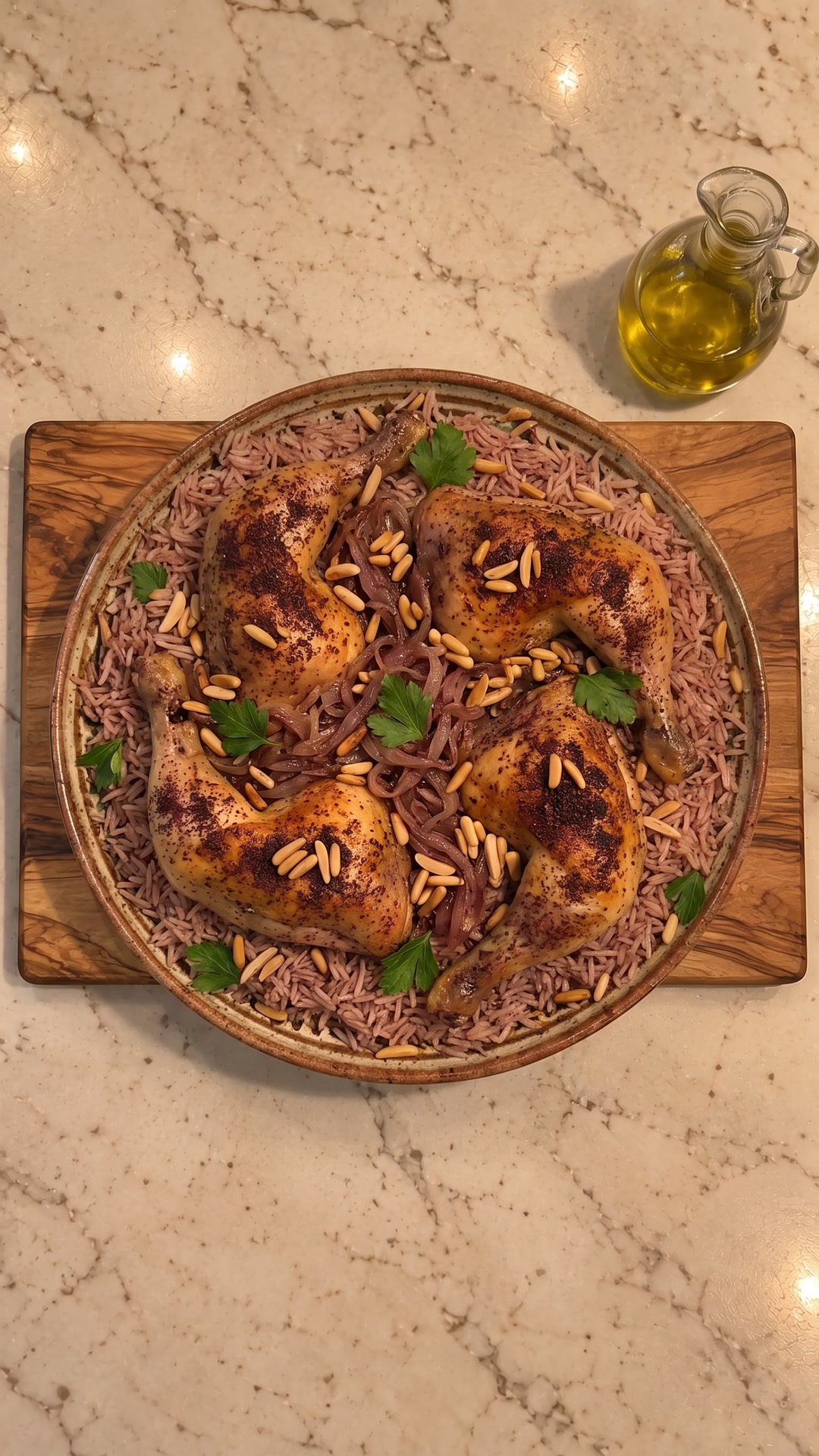
Kabsa Musakhan with Garlic Yogurt Sauce
Ingredients
Method
- Preheat the oven to 220°C (no fan) with a rack in the middle.
- Pat the chicken pieces dry with paper towels, then season them with 50 ml olive oil, the lemon juice, 4 cloves of garlic, 2 tbsp sumac, 1 tsp mixed spices, the cumin, 1 tsp salt and 1/2 tsp black pepper. Rub the marinade well under and over the skin.
- Wash the rice in cold water 3–4 times until the water runs clear, then soak it in lukewarm water for 20 minutes.
- Arrange the chicken skin side up in a baking tray, leaving space between the pieces, and put it in the oven for 40–45 minutes.
- While the chicken roasts, heat 100 ml olive oil in a wide pot over medium heat, and add the onions with 1/2 tsp salt.
- Stir the onions every few minutes for 20–25 minutes until fully softened and golden and caramelized; if they start to stick, lower the heat a little.
- Add 3 tbsp sumac to the onions and stir for 1 minute, then transfer half of the onions to a bowl and set aside for garnish.
- Drain the rice well and add it to the remaining onions in the pot with 1 tsp mixed spices, the cardamom, the cinnamon and 1/2 tsp black pepper, and stir gently for 2 minutes over medium heat.
- Add 900 ml hot stock and the bay leaves, taste the stock and add salt as needed (about 1 tsp if the stock is unsalted), and bring to a boil over high heat.
- Once it boils, lower the heat to the lowest setting, cover the pot tightly and leave the rice for 15 minutes without lifting the lid or stirring.
- Turn off the heat and leave the rice covered for 10 minutes to rest so the grains separate.
- Check that the chicken is cooked: the thickest part of the thigh (not touching the bone) should reach at least 74°C, and the juices should run clear, not pink.
- Spread the reserved onions around the chicken in the tray so they soak up the juices, and sprinkle them with 1/2 tbsp sumac. Then turn on the top grill for 3–4 minutes until the edges of the skin brown and turn crispy, watching so it doesn’t burn.
- Toast the pine nuts and almonds in the ghee in a small pan over medium-low heat for 3–4 minutes, stirring constantly, until golden, then transfer them right away to a plate.
- Make the yogurt sauce: mix the yogurt with the crushed garlic, 1/2 tsp salt and the dried mint, and drizzle the tablespoon of olive oil over it.
- Gently fluff the rice with a fork and remove the bay leaves, then spread it on a large serving platter.
- Arrange the chicken on top of the rice and spread the caramelized onions around it, then sprinkle with the pine nuts, almonds, parsley and the remaining sumac.
- Serve hot with the yogurt sauce on the side or drizzled in light lines over the chicken.
Notes
Frequently asked questions
What is the difference between kabsa musakhan and traditional Palestinian musakhan?
Traditional musakhan is served on taboon bread soaked in olive oil, onions and sumac, while kabsa musakhan replaces the bread with basmati rice cooked with caramelized onions and sumac, topped with the same musakhan-flavored chicken.
Can I use chicken breasts instead of quarters?
Yes, but breasts dry out faster. Use bone-in, skin-on breasts and roast them for 30–35 minutes until their internal temperature reaches 74°C, and don’t leave them in any longer than that.
How do I make the rice fluffy and not mushy?
Wash the rice until the water runs clear, soak it for 20 minutes, and use 900 ml stock for every 600 g rice. Then cook it covered over the lowest heat for 15 minutes and let it rest for 10 minutes without lifting the lid.
Can I make kabsa musakhan ahead for a gathering?
You can marinate the chicken a day ahead and keep it in the fridge, and make the caramelized onions a few hours ahead. It’s best to cook the rice and roast the chicken shortly before serving, and if you need to reheat, warm the chicken in the oven at 180°C for 10–15 minutes covered with foil.