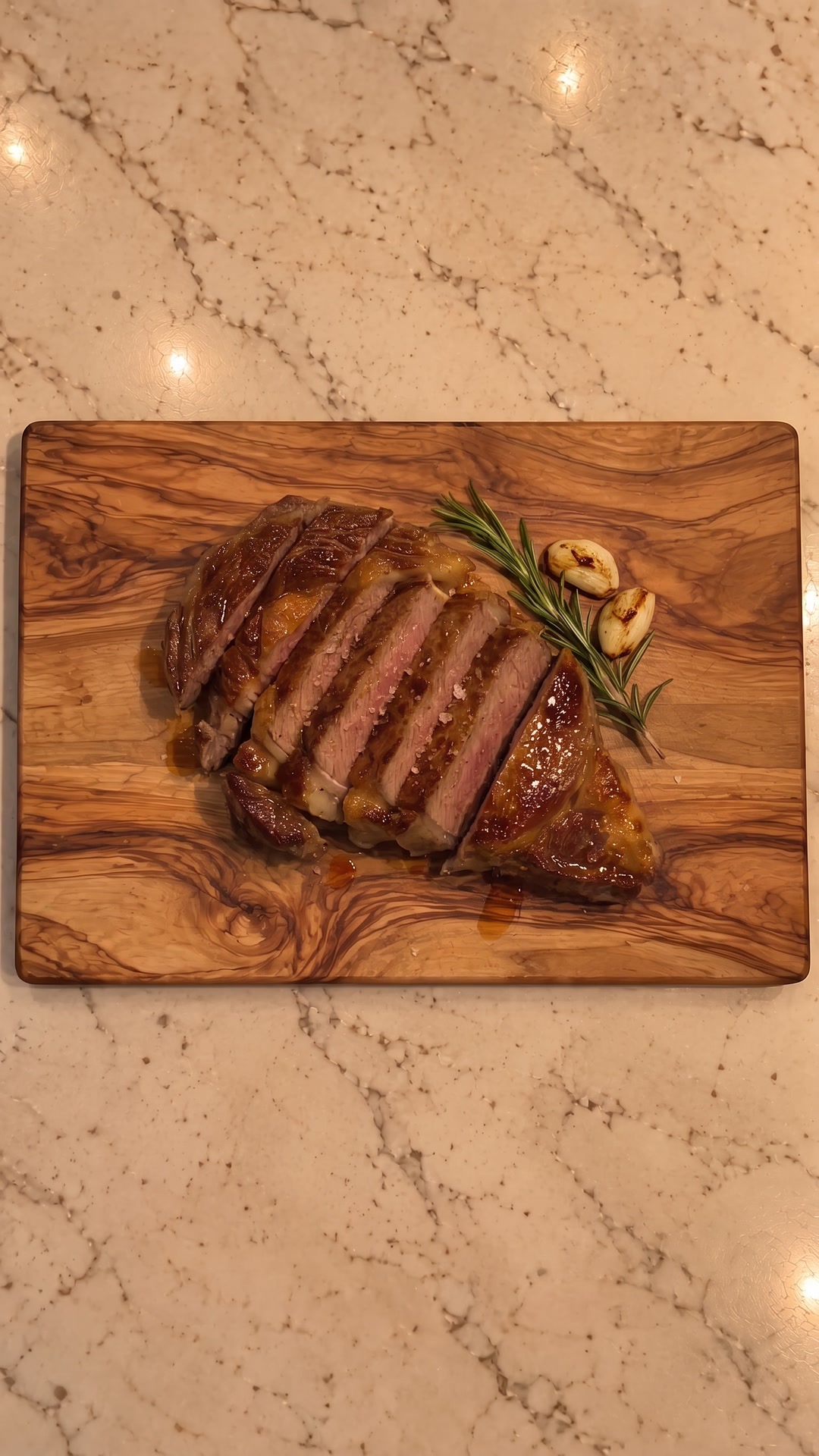
How about making a ribeye steak exactly like the restaurants do, but in your own kitchen? A thick ribeye, about 3 cm, coarse salt and cracked black pepper, a cast-iron pan heated until it smokes, 3 minutes per side without moving it, then butter, garlic and rosemary spooned over it. Rest it 5 minutes and slice it against the grain. The result: a crisp crust outside and tender, juicy meat (medium-rare) inside. An easy recipe for two from Sufrat Um Ghaith.
⚠️ Allergy note: contains Dairy (butter).
Um Ghaith’s tips
- Don’t you dare move the steak during those 3 minutes: every time you move it you ruin the brown crust, which is the secret to that restaurant flavor.
- The pan must be hot enough for the oil to smoke; if it isn’t hot enough, the steak stews in its own juices and comes out gray instead of browned.
- Don’t add the butter at the start, because it burns on high heat; add it only after you turn the heat down.
- If your steak is thinner than 3 cm (say 2 cm), cut the time to 2 minutes per side, and if it’s thicker, go by the thermometer, not the clock.
- The 5-minute rest isn’t a luxury: it lets the juices spread back through the meat instead of running onto the board.
Restaurant-Style Pan-Seared Ribeye Steak at Home
Ingredients
Method
- Take the steak out of the fridge half an hour (30 minutes) before cooking and leave it at room temperature.
- Pat the steak very dry on both sides with paper towels, because moisture stops the crust from forming.
- Season the steak generously on both sides with the coarse salt and cracked black pepper.
- Put the cast-iron pan on high heat and heat it for 4–5 minutes until it is very hot.
- Add the tablespoon of oil, spread it around the pan, and wait until it starts to give off a light smoke.
- Lay the steak in the pan away from you, and leave it 3 minutes on high heat without moving it at all.
- Flip the steak once with tongs, and leave it another 3 minutes on high heat without moving it.
- Turn the heat down to medium, and add the butter, crushed garlic and rosemary sprigs beside the steak.
- Tilt the pan slightly so the melted butter pools, and keep spooning it over the steak for 1 to 1 1/2 minutes.
- Check the temperature with a meat thermometer at the thickest point: 52–54°C means medium-rare (it reaches about 57°C after resting). If you want medium, keep cooking on medium heat until 60°C, and for well done until at least 63°C, basting all the while.
- Move the steak to a cutting board and let it rest 5 minutes without covering it tightly.
- Slice the steak about 1 cm thick against the grain.
- Pour the pan butter and garlic over the slices, sprinkle with flaky salt if you like, and serve right away.
Notes
Frequently asked questions
How many minutes do I cook a ribeye steak on each side?
For a steak about 3 cm thick in a hot cast-iron pan: 3 minutes per side, then 1 to 1 1/2 minutes of butter basting, and it comes out medium-rare (52–54°C before resting). For more doneness, keep cooking on medium heat and go by the thermometer.
What is the internal temperature for each level of doneness?
Medium-rare is 52–54°C before resting (about 57°C after), medium about 60°C, and well done 63°C and above, which is the recommended safe temperature for whole cuts of meat with at least 3 minutes of rest.
Can I make the steak in a regular pan instead of cast iron?
Yes, use a heavy-bottomed stainless steel pan. Nonstick pans can’t take heat high enough to smoke and won’t give you the same crust.
Why do I have to slice the steak against the grain?
Because slicing against the grain shortens the muscle fibers, so every bite is tender and easy to chew instead of rubbery.